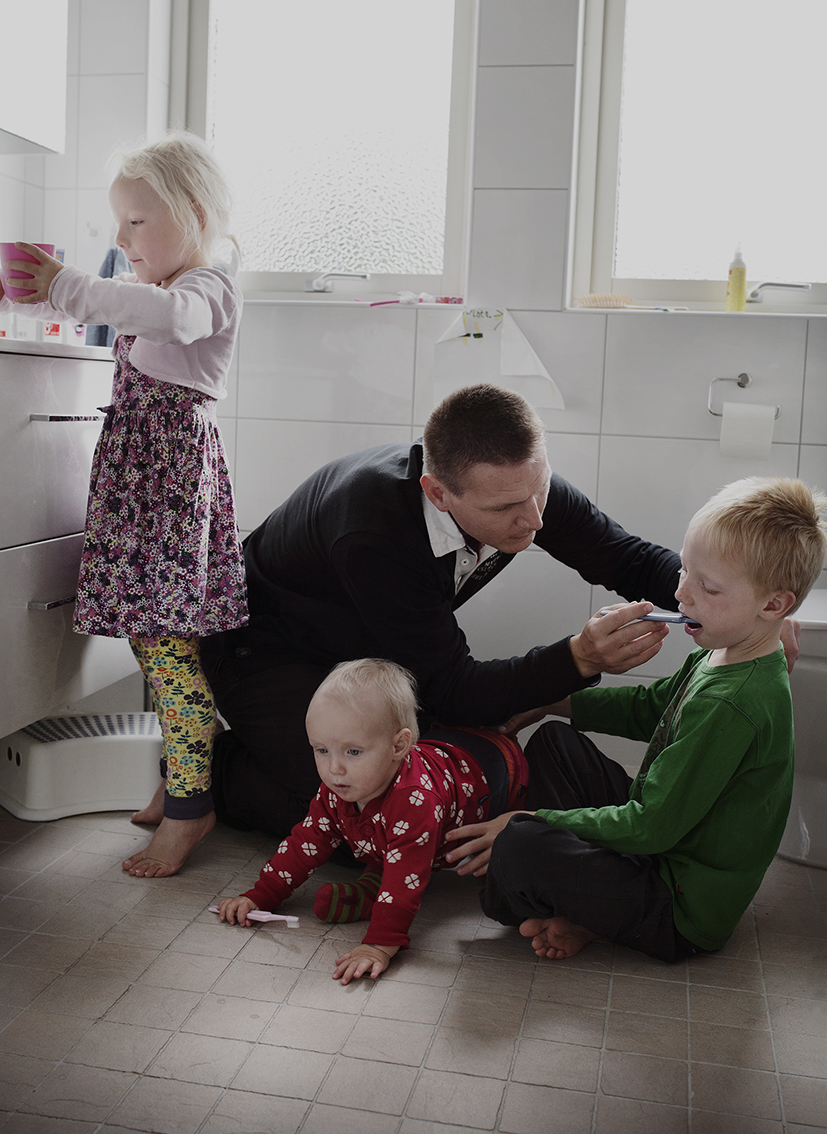
Creșterea copilului a fost în mod tradițional responsabilitatea femeilor, însă un număr tot mai mare de tați din Suedia au început să vadă avantajele concediului paternal. Expoziția de fotografie Swedish Dads prezintă modul în care tații suedezi percep rolul bărbatului modern, în contrast cu rolul stereotipului tradițional, paternal.
Atunci când fotograful suedez Johan Bävman a devenit tată, a realizat că există o lipsă de modele masculine care să reprezinte un model de părinte. Acest lucru l-a determinat să creeze un album foto numit Swedish Dads, care prezintă barbați aflați în concediu paternal, alături de copiii lor.
Expoziția Swedish Dads, adusă în premieră în Craiova, urmărește analizarea motivelor pentru care acești tați au decis să rămână acasă, având grijă de copii, mai mult decât majoritatea taților din întreaga lume. Ce a însemnat acest lucru pentru ei, cum le-au fost afectate relațiile de cuplu, cât și cu copiii lor, dar și ce așteptări au avut ei în prealabil?
Ambasada Suediei invită craiovenii la vernisajul expoziției Swedish Dads Craiova în data de 28 septembrie 2017, la ora 18:00, la TeatrulNațional „Marin Sorescu” Craiova. Tinerii craioveni vor avea totodată, ocazia să afle mai multe despre oportunitățile de studiu din Suedia și despre societatea suedeză într-un format vizual atractiv. Așadar, invităm în mod special profesorii din Craiova să viziteze expoziția împreună cu elevii lor oricând în perioada 28 septembrie – 12 octombrie2017.
Expoziția prezintă fotografiile a 20 de tați din Suedia, fiind un proiect comun între Institutul Suedez, AmbasadaSuediei la București împreună cu partenerii noștri Teatrul Național „Marin Sorescu” Craiova, Europe Direct Craiova și Study in Sweden.

Sweden has one of the most generous parenteral leave system in the world.
The current system enables parents to stay at home with their child for a total of 480 days, while receiving an allowance from the state. Sixty of these days are allotted to each parent, and a new proposal aims to increase this by a further thirty days.
The purpose of this allocation is to promote gender equality. In order to encourage men and women to share their parental leave more equally, a so-called Ôequality bonusÕ has also been introduced. The more days divided equally between parents, the higher the bonus.
In spite of this generous allowance and unique bonus, only a fraction of SwedenÕs fathers use all their sixty days of parental leave. Only fourteen per cent of parents choose to share the days equally.
This photo essay is based on portraits of dads who belong to that small percentage who choose to stay at home with their child for at least six months. With this project, I want to find out why these men have chosen to stay at home so much longer than the majority of Swedish dads. What has it done for them, how have their relationships with their partner and their child changed, and what expectations did they have before taking parental leave?
There are two aims to this project. The first is to describe the background to SwedenÕs unique parental allowance. The second is to inspire other fathers Ð in Sweden, and further afield Ð to consider the positive benefits of such a system.
Sweden has one of the most generous parenteral leave system in the world.
The current system enables parents to stay at home with their child for a total of 480 days, while receiving an allowance from the state. Sixty of these days are allotted to each parent, and a new proposal aims to increase this by a further thirty days.
The purpose of this allocation is to promote gender equality. In order to encourage men and women to share their parental leave more equally, a so-called Ôequality bonusÕ has also been introduced. The more days divided equally between parents, the higher the bonus.
In spite of this generous allowance and unique bonus, only a fraction of SwedenÕs fathers use all their sixty days of parental leave. Only fourteen per cent of parents choose to share the days equally.
This photo essay is based on portraits of dads who belong to that small percentage who choose to stay at home with their child for at least six months. With this project, I want to find out why these men have chosen to stay at home so much longer than the majority of Swedish dads. What has it done for them, how have their relationships with their partner and their child changed, and what expectations did they have before taking parental leave?
There are two aims to this project. The first is to describe the background to SwedenÕs unique parental allowance. The second is to inspire other fathers Ð in Sweden, and further afield Ð to consider the positive benefits of such a system.